


Holographic positioning hot stamping has become the preferred anti-counterfeiting method for high-end cigarette packaging due to its unique light-change effects, complex patterns, and extremely high threshold for copying. However, achieving consistent registration accuracy — typically within ±0.1mm — is one of the most significant technical challenges in this process. This article explains how holographic positioning hot stamping works, what affects registration accuracy, and how modern servo-driven multi-station equipment addresses these challenges.
What Is Holographic Positioning Hot Stamping?
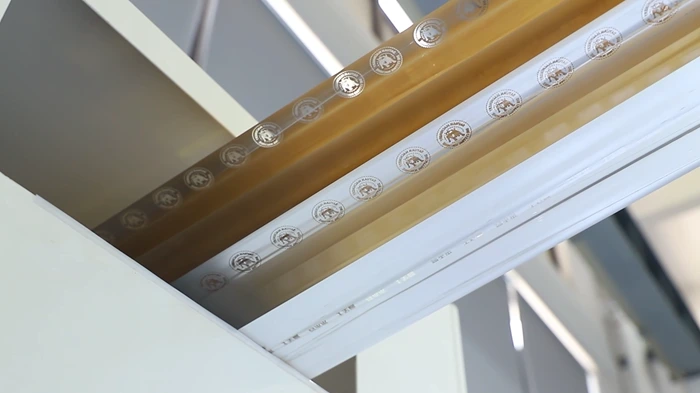
Holographic positioning hot stamping is a specialized foil transfer process that applies a pre-registered holographic image — such as a logo, security pattern, or microtext — to a specific location on the packaging substrate. Unlike non-registered holographic stamping (which applies a continuous "wallpaper" design), positioning hot stamping requires the holographic image to align precisely with printed graphics, variable data, or structural elements of the package.
The process involves three key elements:
- Holographic stamping foil: A multi-layer polyester film carrying the holographic image, typically 15-25 microns thick, with registration marks (eye marks) printed on the foil edge
- Hot stamping machine: Equipped with a registration detection system that reads the foil's eye marks and adjusts foil feed timing
- Positioning control system: Ensures the holographic image is transferred to the exact location on each sheet
For cigarette packaging applications, the tobacco packaging solutions page provides an overview of equipment configurations designed for holographic positioning requirements.

Why Is Registration Accuracy Critical in Cigarette Packaging?
Cigarette packaging presents unique challenges for holographic positioning hot stamping:
High-speed production: Cigarette packaging lines operate at 6,000+ sheets per hour. At these speeds, even microsecond timing errors can cause visible misalignment.
Complex multi-process requirements: Premium cigarette packs often require multiple holographic stamping applications — sometimes two or three different holographic images on the same package. Each image must align not only with the printed design but also with other stamped images.
Strict anti-counterfeiting standards: Regulatory requirements for tobacco product authentication demand consistent, verifiable security features. Misaligned holograms not only reduce visual appeal but can also compromise anti-counterfeiting effectiveness.
Specialty substrates: Cigarette packaging uses a wide range of materials including glossy photo paper, aluminum paper, laser paper, and cardboard from 80 to 2000 g/m². Each material behaves differently under heat and pressure, affecting registration stability.
What Affects Holographic Positioning Registration Accuracy?
Several factors influence the registration accuracy of holographic positioning hot stamping:
1. Foil Tension Control
Inconsistent foil tension causes the holographic image to stretch or shift relative to the registration marks. As production speed increases, tension fluctuations become more pronounced, making precise control essential.
2. Temperature Uniformity
Holographic stamping requires precise temperature control to activate the adhesive coating on the foil. Uneven heating — particularly across large stamping areas — can cause the foil to expand unevenly, shifting the holographic image out of alignment.
3. Mechanical Registration System Precision
Traditional single-motor driven multi-station machines use long transmission shafts to connect multiple stamping units. Each additional station introduces mechanical losses, torsional deformation, and cumulative errors that reduce registration accuracy at downstream stations.
4. Sheet Feeding Stability
The gripper bar system that transports each sheet through the machine must maintain consistent positioning. Any variation in gripper bar alignment — whether from wear, thermal expansion, or mechanical play — translates directly into registration error.
5. Substrate Variation
Different paper types and weights respond differently to the heat and pressure of the stamping process. Materials with higher moisture content or uneven caliper can expand or contract during processing, shifting the printed image relative to the holographic stamp.
How Does Servo-Driven Multi-Station Technology Improve Registration Accuracy?
Traditional multi-station hot stamping machines use a single motor to drive all stations through mechanical transmission shafts. This design has inherent limitations:
- Mechanical losses increase with each additional station
- Torsional deformation causes timing errors between stations
- Pressure and speed drop at the final station
- Registration errors accumulate across the production line
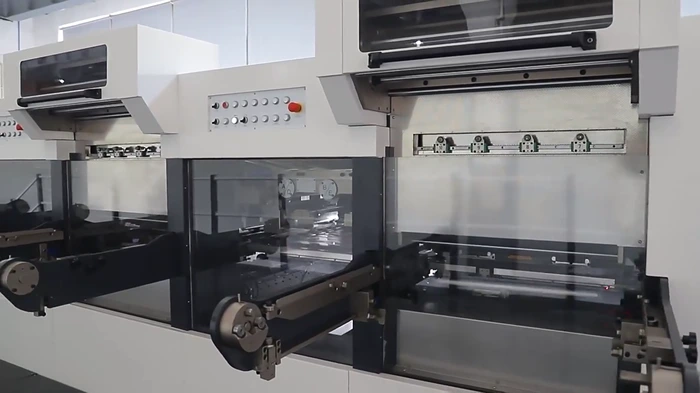
Modern servo-driven multi-station equipment addresses these challenges through independent drive per station:
Individual servo motors allow each stamping unit to operate asynchronously. Each station can be started, stopped, or adjusted independently without affecting other stations.
Direct drive eliminates mechanical transmission losses. Each station receives full torque and maintains consistent speed regardless of how many stations are active.
Precision position control enables micro-adjustments to each station's timing. Operators can fine-tune registration for each holographic image independently.
For detailed specifications of multi-station hot stamping machine configurations, refer to the product category page.
What Registration Accuracy Can Be Achieved?
Industry benchmarks for holographic positioning registration vary by application:
| Application | Typical Registration Accuracy |
| General holographic stamping | ±0.2mm |
| High-speed positioning holographic stamping | ±0.25mm |
| Registered hologram with closed-loop camera control | ±0.1mm |
| Advanced servo-driven multi-station systems | ±0.075mm |
The gap between ±0.25mm and ±0.075mm represents a significant difference in anti-counterfeiting effectiveness. At ±0.25mm, slight misalignment may be visible to the naked eye, reducing the perceived quality and security of the package. At ±0.075mm, the holographic image aligns perfectly with the printed design, creating a seamless, high-quality appearance that is extremely difficult to replicate.
Common Registration Problems and Their Causes
| Problem | Typical Cause | Prevention Approach |
| Hologram shifts left/right | Foil tension variation | Servo-driven tension control |
| Hologram shifts up/down | Sheet feeding timing error | Independent gripper bar adjustment |
| Hologram rotates | Substrate skew during feeding | Precision sheet alignment system |
| Inconsistent registration across run | Temperature fluctuation | Multi-zone independent temperature control |
| Registration drift over time | Mechanical wear or thermal expansion | Digital registration compensation |
Checklist for Evaluating Holographic Positioning Equipment
When assessing equipment for holographic positioning hot stamping, consider the following factors:
- Does each stamping station have an independent servo drive, or are all stations driven by a single motor?
- Can each station's timing be adjusted independently without affecting other stations?
- What is the specified registration accuracy under full production speed?
- Does the control system support real-time registration monitoring and compensation?
- How does the machine handle substrate variations that affect registration?
- What is the temperature control precision across the stamping area?
- Can the machine store and recall registration settings for repeat jobs?
- What is the typical setup time for a new holographic stamping job?
Frequently Asked Questions
Q: What is the difference between registered and non-registered holographic stamping?
Non-registered holographic stamping applies a continuous holographic pattern (like wallpaper) across the entire stamped area. Registered holographic stamping applies a specific holographic image at a precise location on the package, aligned with the printed design. Registered stamping requires higher machine precision and is used for anti-counterfeiting applications.
Q: Why can't traditional single-motor multi-station machines achieve ±0.1mm registration?
Single-motor machines drive multiple stations through mechanical transmission shafts. Each additional station introduces mechanical losses, torsional deformation, and cumulative timing errors. By the time the sheet reaches the final station, registration accuracy has degraded significantly. Independent servo drives eliminate these mechanical losses.
Q: How does temperature affect holographic stamping registration?
Holographic stamping foil requires heat to activate its adhesive coating. Uneven heating causes the foil to expand unevenly, shifting the holographic image. Multi-zone independent temperature control systems maintain uniform heat distribution (±1℃), preventing expansion-related registration errors.
Q: What materials are compatible with holographic positioning hot stamping?
Holographic positioning hot stamping can be applied to a wide range of substrates including cardboard (80-2000 g/m²), glossy photo paper, aluminum paper, laser paper, and cigarette wrapping paper. However, each material requires specific temperature, pressure, and timing settings to achieve optimal registration.
Q: How long does it take to set up a new holographic stamping job?
Setup time depends on the complexity of the holographic design and the number of stamping stations. Modern quick-change systems with stored job parameters can reduce setup time to 5-8 minutes for format changes. Complex multi-station jobs may require 15-20 minutes for complete setup including registration calibration.
Conclusion
Holographic positioning hot stamping is one of the most effective anti-counterfeiting technologies available for cigarette packaging. However, achieving consistent registration accuracy — particularly at high production speeds — requires equipment capable of precise, independent control over each stamping station.
The key factors that determine registration accuracy are:
- Foil tension control
- Temperature uniformity
- Mechanical registration system precision
- Sheet feeding stability
- Substrate variation management
Modern servo-driven multi-station systems address these challenges through independent drive per station, eliminating mechanical losses and enabling real-time registration compensation. With closed-loop camera control, registration accuracy of ±0.1mm or better is achievable.
For cigarette packaging producers, the choice of hot stamping equipment directly affects both the visual quality and anti-counterfeiting effectiveness of the final package. Understanding the technical requirements of holographic positioning — and how different equipment designs meet those requirements — is essential for making informed production decisions.
To explore available configurations for holographic positioning hot stamping, review the tobacco packaging solutions page for detailed equipment specifications and application examples.